How Much Protein per Day?
The short answer: How much protein per day? Most women need at least 46 grams, and the 2025 to 2030 Dietary Guidelines set a goal of 1.2 to 1.6 grams per kilogram of body weight. That is 76 to 102 grams for a 140-pound woman.
- The 46 gram figure is the RDA (0.8 g per kg). It was set to avoid deficiency, not to be the best amount for everyone.
- The average US woman eats 68.8 grams a day, enough for the RDA but under the new goal at 140 pounds.
- No upper limit has been set, and trials in the 1.2 to 1.6 range saw no harm to kidneys, bones or metabolic markers.
Last updated October 2026.
How much protein per day you need depends on which number you mean. The Recommended Dietary Allowance (RDA) for women 19 and older is 46 grams a day. The newer Dietary Guidelines for Americans, 2025 to 2030 set a higher goal of 1.2 to 1.6 grams per kilogram of body weight.
This guide shows both numbers by weight, age and activity, what they look like on a plate, and where the limits are. For the wider picture, see our guide to nutrition for women over 40.
How much protein per day does a woman need?
A woman needs at least 46 grams a day to meet the RDA, and the federal goal is 1.2 to 1.6 grams per kilogram of body weight. The two numbers answer different questions, and the table below puts them side by side for a 140-pound woman (63.5 kg).
| Situation | Grams per kg per day | For a 140 lb woman |
|---|---|---|
| RDA, set to avoid deficiency | 0.8 | 51 g |
| Federal goal, 2025 to 2030 | 1.2 to 1.6 | 76 to 102 g |
| Regular strength or endurance training | Up to about 1.6 | Up to 102 g |
| Adults over 65 (expert group advice) | 1.0 to 1.2 or more | 64 to 76 g or more |
The RDA table lists a flat 46 grams for women, while the per-kilogram math gives 51 grams at 140 pounds. The scientific report behind the new guidelines says the RDA “represents the lowest intake that maintains equilibrium in most healthy adults but does not reflect the intake required to maintain optimal muscle mass or metabolic function under all conditions.”
How much protein per day by body weight?
Multiply your weight in kilograms by 1.2 and by 1.6 to get your goal range. To find kilograms, divide your weight in pounds by 2.2.
| Body weight | RDA (0.8 g/kg) | Goal (1.2 to 1.6 g/kg) |
|---|---|---|
| 120 lb (54.4 kg) | 44 g | 65 to 87 g |
| 140 lb (63.5 kg) | 51 g | 76 to 102 g |
| 160 lb (72.6 kg) | 58 g | 87 to 116 g |
| 180 lb (81.6 kg) | 65 g | 98 to 131 g |
The guidelines add that the goal is “adjusting as needed based on your individual caloric requirements.”
Does the amount change with age?
The RDA is 46 grams for women at 19 to 30, 31 to 50 and 51 and older, and the 2025 to 2030 goal is the same for all adults. Older adults may need more, though, because the body uses protein less efficiently with age.
The guidelines say some older adults “need fewer calories but still require equal or greater amounts of key nutrients such as protein.” A position paper from a European geriatric study group advises at least 1.0 to 1.2 grams per kg for people over 65. It says most older adults with an illness need 1.2 to 1.5. That is expert advice, not a US rule.
Here is what women eat, from USDA survey data for 2017 to March 2020:
| Age | Average protein a day |
|---|---|
| 20 to 29 | 73.5 g |
| 30 to 39 | 70.7 g |
| 40 to 49 | 66.5 g |
| 50 to 59 | 70.5 g |
| 60 to 69 | 67.8 g |
| 70 and older | 62.7 g |
The overall average for women 20 and older is 68.8 grams. That is about 23 grams above the RDA and about 1.1 grams per kg for a 140-pound woman. The common gap is against the higher goal, not the RDA. More on this topic is in our nutrition coverage.
How much protein do you need to build muscle?
Muscle gains rise with protein up to about 1.6 grams per kg a day and then level off. The scientific report says that in people who do regular resistance or endurance training, trials show better muscle growth and strength “with increasing daily protein intake up to approximately 1.6 g/kg body weight.”
A meta-analysis of 49 studies with 1,863 people found the same ceiling during resistance training, and a smaller effect with increasing age. A review of 30 trials of 1.2 to 1.6 grams per kg found people kept 0.81 kg more lean mass. Most of those trials were in adults with overweight who were cutting calories.
What does 76 to 102 grams of protein look like in food?
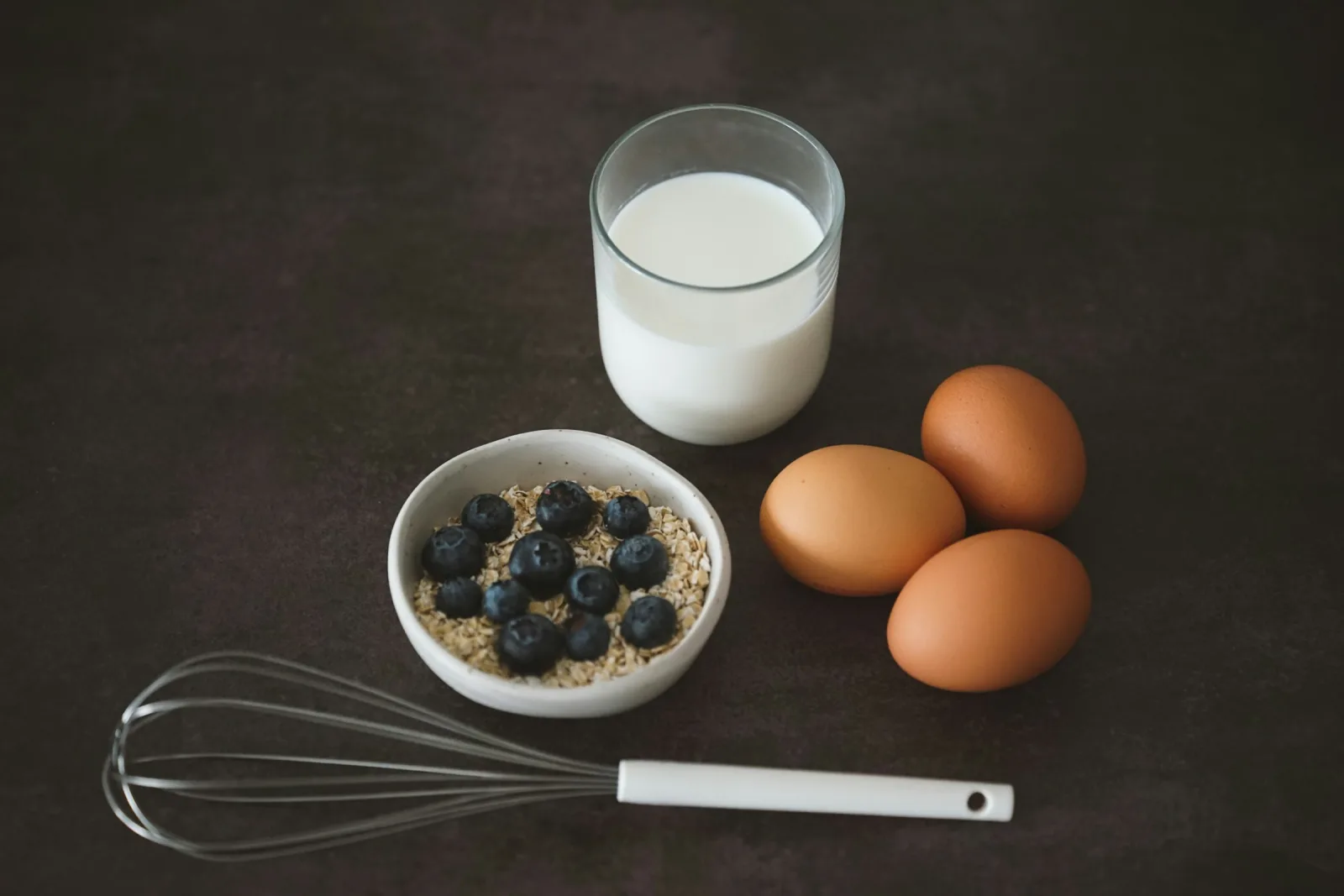
It takes a protein food at every meal. The amounts below are from USDA FoodData Central, per 100 grams (about 3.5 ounces). The guidelines count both animal and plant sources: eggs, poultry, seafood and red meat, plus beans, peas, lentils, nuts, seeds and soy.
| Food (100 g) | Protein |
|---|---|
| Chicken breast, roasted | 31.0 g |
| Tuna, light, canned in water, drained | 25.5 g |
| Firm tofu, with calcium sulfate | 17.3 g |
| Egg, hard-boiled | 12.6 g |
| Cottage cheese, 1% milkfat | 12.4 g |
| Greek yogurt, plain, nonfat | 10.3 g |
| Lentils, boiled | 9.02 g |
| Black beans, boiled | 8.86 g |
One day that adds up to about 98 grams, or about 1.5 grams per kg for a 140-pound woman:
- Breakfast: 100 g of hard-boiled egg and 150 g of Greek yogurt, 28.1 g.
- Lunch: 200 g of lentils and 100 g of cottage cheese, 30.4 g.
- Dinner: 100 g of chicken breast and 100 g of black beans, 39.9 g.
Can you eat too much protein?
No upper limit for protein has been set. The scientific report found “no evidence of adverse effects on kidney function, bone health, or metabolic markers” within the 1.2 to 1.6 range, and it notes that “currently no upper limit for dietary protein has been established due to a lack of high-quality studies.”
The accepted range for adults is 10 to 35% of calories. The top of that range is roughly 2.5 grams per kg, or about 159 grams for a 140-pound woman. Two groups should check with a doctor first. One is people with severe kidney disease, who may need to limit protein, according to the geriatric position paper. The other is women who are pregnant or breastfeeding, whose needs rise.
Frequently asked questions
How much protein should a 40-year-old woman eat a day?
The federal goal is 1.2 to 1.6 grams per kilogram of body weight, which is 76 to 102 grams for a 140-pound woman. The RDA is 46 grams. Women in their 40s average 66.5 grams a day, so many fall below the goal.
Is 100 grams of protein a day too much?
For most healthy women, no. A woman weighing 140 pounds would reach 100 grams at about 1.6 grams per kg, the top of the goal range. No upper limit has been set, but talk to your doctor first if you have kidney disease.
Can you get enough protein from plants?
Yes, the guidelines name beans, peas, lentils, nuts, seeds and soy as protein foods. Per 100 grams, boiled lentils give 9.02 grams and firm tofu gives 17.3 grams, so plant eaters may need larger portions.
Does the same number apply during pregnancy?
No. The scientific report says protein requirements increase in pregnancy and breastfeeding. Ask your doctor or dietitian for a personal target.
This article is for education and is not medical advice. Talk to your doctor before changing your diet, supplements, or medication.
Health Science Mag is an educational publication. Articles are for information only and are not medical advice. Talk to your clinician before changing your supplement routine.