Fiber and Joint Health: What a New Study Suggests
The short answer: Fiber and osteoarthritis are possibly linked, a little. In large studies, adults who ate the most fiber had lower odds of osteoarthritis and of bad knee pain, but these studies show a link, not proof, and the best trial so far enrolled only 117 adults.
- In a U.S. survey of 30,620 adults, the highest fiber group had 27% lower odds of osteoarthritis than the lowest group.
- In a cohort of 4,796 adults followed for 8 years, the highest fiber group was less likely to land in the severe knee pain group.
- In a 2026 trial of 117 adults, 6 weeks of 20 g a day of inulin fiber lowered pain scores by 1.11 points more than placebo.
Last updated October 2026.
The link between fiber and osteoarthritis is modest and still being tested. Osteoarthritis is the most common type of arthritis, and women are more likely than men to have it, especially after age 50. In a 2025 analysis of 30,620 U.S. adults, people who ate the most fiber were less likely to have it.
This article explains what the studies found, why fiber might matter for joints, and how much weight to give the results. For the basics of how much you need, see our complete guide to fiber for women.
Does fiber help with osteoarthritis?
Sometimes, and only a little, as far as we know. People who eat more fiber tend to have less knee osteoarthritis and less knee pain. Two small trials of fiber supplements also found some benefit. None of this shows that fiber changes the disease itself.
The evidence comes in three layers: one national survey, two long-term cohorts that followed people over time, and two small trials. Each layer is covered below, along with its limits.
What did the newest study find?
A 2026 randomized trial found that a fiber supplement lowered knee pain scores in adults with knee osteoarthritis. The trial enrolled 117 adults, 58.1% of them women, with an average age of 67.5. For 6 weeks they took 20 g a day of inulin, a prebiotic fiber, or 10 g a day of maltodextrin as a placebo.
Pain improved with inulin by 1.11 points more than with placebo (95% confidence interval -2.18 to -0.04). That range barely excludes zero, so the result is real but small and uncertain. The same trial tested an exercise program, which lowered pain by 1.55 points. Only 3.6% of the inulin group dropped out, against 21% in the exercise group.
An earlier trial followed 54 adults with knee osteoarthritis and obesity for 6 months on 16 g a day of an inulin-type fiber. Walking and strength tests improved more than with placebo. The knee pain change was only a trend (p = 0.059), so it did not reach the usual cutoff. The authors say larger trials are needed.
What do large studies of everyday fiber show?
Large studies link higher fiber intake from food to less osteoarthritis and less knee pain, with one exception. The table shows each study and what it can and cannot tell us.
| Study | Who | Main finding | Type of evidence |
|---|---|---|---|
| U.S. national survey (2025) | 30,620 adults | Highest vs lowest fiber group: 27% lower odds of osteoarthritis | Cross-sectional snapshot |
| Osteoarthritis Initiative (2017) | 4,796 adults aged 45 to 79, followed 8 years | Highest fiber group had lower odds of moderate pain (odds ratio 0.76) and severe pain (0.56) | Cohort |
| Two U.S. cohorts (2018) | 2,876 and 971 adults | 21 g a day or more vs less: odds ratio 0.70 for symptomatic knee osteoarthritis in the larger cohort | Cohort |
| Singapore Chinese Health Study (2021) | 63,257 adults aged 45 to 74 | Total fiber was not linked to knee replacement; legumes were (hazard ratio 0.86) | Cohort |
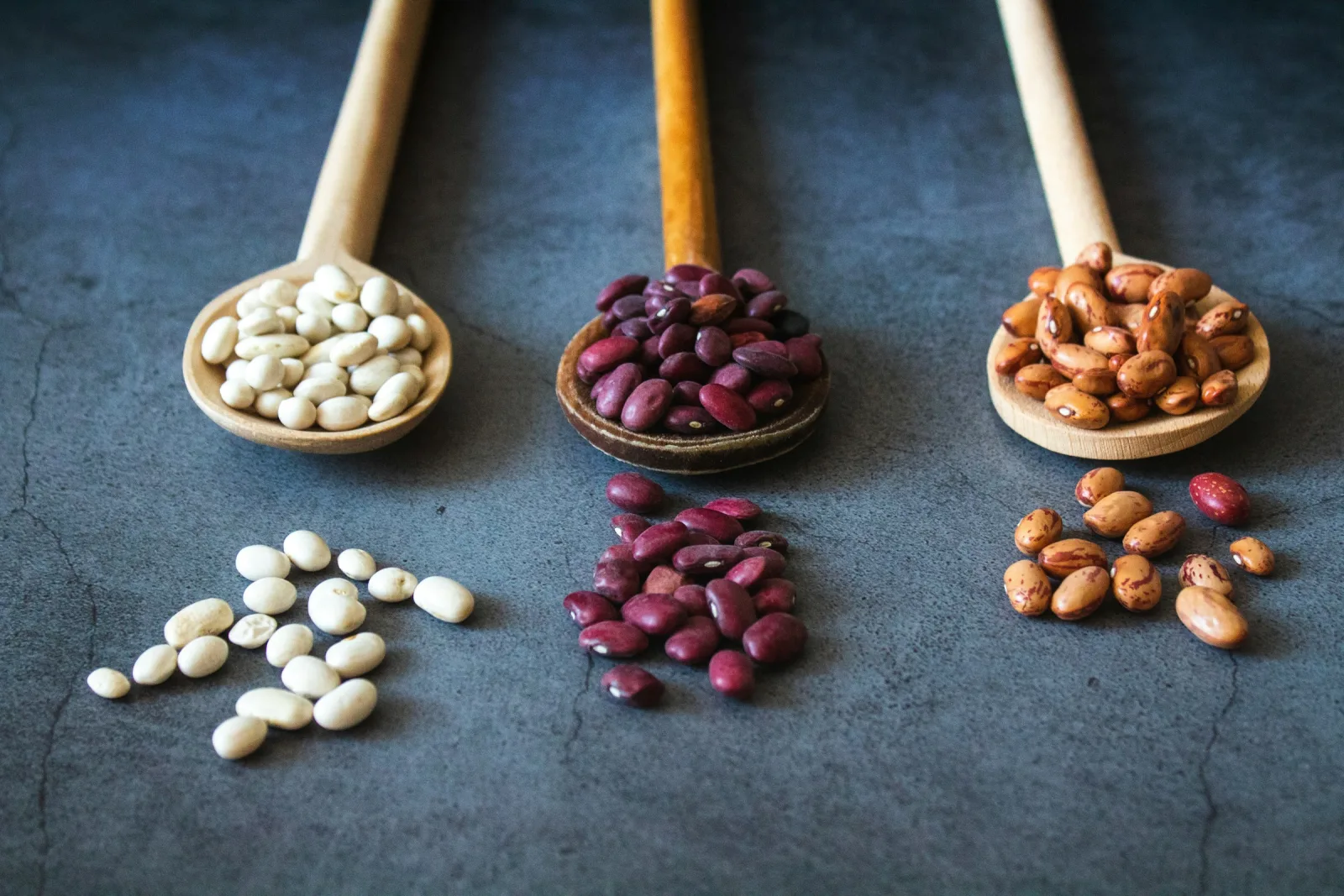
Put plainly, an odds ratio of 0.70 means about 30% lower odds, and 0.56 means about 44% lower odds. The Singapore result is the odd one out. Total fiber showed no link there, but people who ate the most legumes, such as beans and lentils, had about 14% lower risk of needing a knee replacement. Grains, nuts, fruit and vegetables showed no link.
How might fiber affect joints?
Researchers suspect fiber works partly through body weight. The 2018 analysis concluded that the link between fiber and knee osteoarthritis is “partially mediated by BMI.” Being overweight is a named risk factor for osteoarthritis, along with age, joint injury and family history, according to the National Institute of Arthritis and Musculoskeletal and Skin Diseases.
Gut bacteria are the second idea. In the 2026 trial, only the inulin group had higher blood levels of butyrate, a compound gut bacteria make from fiber, and of the gut hormone GLP-1. That is a clue about how it might work, not proof. Our guide to what soluble fiber is explains how fiber feeds gut bacteria.
How strong is the evidence for fiber and osteoarthritis?
The evidence is weak to moderate. It rests on one survey, three cohorts and two small trials, with no review that pools them. The survey cannot say whether fiber came first or osteoarthritis did. People who eat more fiber also tend to weigh less, move more and eat better overall, and food questionnaires are imperfect.
The trials are short and small: 54 and 117 adults, 6 months and 6 weeks. The national survey also found that the benefit leveled off. Intake in the range of 14.4 to 26.7 g was linked to lower odds, and eating more than that added no clear extra benefit. The survey’s authors say “further studies are needed to confirm these findings.”
What can you do with this?
The practical step is the one you probably need anyway: reach the usual fiber target. The Dietary Guidelines for Americans, 2020 to 2025, set it at 25 g a day for women aged 31 to 50 and 22 g from age 51. The average woman in the U.S. eats 15.2 g, so most have room to add about 7 to 10 g.
Add fiber slowly, drink water, and favor beans, lentils, oats, fruit and vegetables. The supplement doses in the trials (16 and 20 g a day) are large and can cause gas and bloating, and they were tested under study conditions. Joint pain has many causes, and osteoarthritis care usually includes exercise and weight management. Talk to your doctor before using fiber for joint pain, and read our guide to soluble and insoluble fiber to choose foods.
Frequently asked questions
Can fiber reduce knee pain?
It might, a little. In a 2026 trial of 117 adults with knee osteoarthritis, 20 g a day of inulin lowered pain scores by 1.11 points more than placebo over 6 weeks. The result was borderline, and larger trials are needed.
How much fiber should I eat if I have osteoarthritis?
No official fiber target exists for osteoarthritis. The general target for women is 25 g a day at ages 31 to 50 and 22 g from age 51. Studies linked intakes of about 21 to 25 g a day with better knee outcomes.
Does fiber help rheumatoid arthritis too?
This article covers osteoarthritis only. We did not find verified research on fiber and other types of arthritis that we could report here. Ask your doctor about your specific condition.
Is a fiber supplement better than food for joint health?
Nobody knows yet. The trials tested inulin supplements, while the large studies looked at fiber from food. No study has compared the two for osteoarthritis.
These statements have not been evaluated by the Food and Drug Administration. This product is not intended to diagnose, treat, cure, or prevent any disease.
This article is for education and is not medical advice. Talk to your doctor before changing your diet, supplements, or medication.
Health Science Mag is an educational publication. Articles are for information only and are not medical advice. Talk to your clinician before changing your supplement routine.