What Is Soluble Fiber? What It Does in the Body
What is soluble fiber? It is the type of fiber that dissolves in water and turns into a gel in your gut, where it slows digestion and feeds gut bacteria.
- In a review of 67 trials, 2 to 10 grams a day of soluble fiber went with a small drop in LDL cholesterol.
- The FDA allows a heart-health claim for 3 grams a day of oat or barley beta-glucan, or 7 grams a day of psyllium soluble fiber.
- Women in the US average 15.2 grams of total fiber a day, against targets of 22 to 28 grams.
Last updated October 2026.
What is soluble fiber? It is the part of plant food that mixes with water and cannot be digested by your body. Instead of being absorbed, it forms a gel and moves on to the large intestine. Most women could use more of it: women in the US eat an average of 15.2 grams of total fiber a day, according to USDA survey data.
This explainer covers what soluble fiber is, how it works, what trials found, and where to find it. For the full picture of how much fiber you need, see our complete guide to fiber for women.
What is soluble fiber, in plain words?
Soluble fiber is a plant carbohydrate that dissolves in water and is partly broken down by bacteria in the colon. A review for clinicians puts the contrast simply: “Soluble fiber dissolves in water and is partially fermented in the colon, while insoluble fiber does not dissolve and mainly adds bulk to the stool.”
All fiber comes from plants: fruits, vegetables, whole grains, beans, nuts and seeds. Soluble fibers have names you may see on labels, including pectin, gums, mucilage and fructans. Most foods hold a mix of both types, so you do not need to count them separately.
How does soluble fiber work in the body?
It works in three steps: it thickens into a gel, it grabs bile acids, and it feeds gut bacteria. The same clinician review explains that soluble fibers “absorb water to form a gel that slows gastric emptying, delays glucose absorption, and blunts postmeal blood sugar spikes.”
The gel also binds bile acids, which your liver makes from cholesterol. That is one route by which soluble fiber is thought to lower LDL cholesterol a little.
Further along, gut bacteria take over. Human enzymes cannot digest most plant fibers, so, as a review of fiber and the gut microbiota describes, microbes break them down into short-chain fatty acids, “including acetate, propionate, and butyrate.”
These fatty acids can serve as energy for the cells that line the gut. The 2025 to 2030 guidelines add that high-fiber foods “support a diverse microbiome, which may be beneficial for health” (Dietary Guidelines for Americans). For more on that side, see our guide to gut health for women.
What does soluble fiber do for cholesterol?
In trials, soluble fiber lowers LDL cholesterol by a small amount. A meta-analysis of 67 controlled trials found that 2 to 10 grams a day was linked with small but significant drops in total and LDL cholesterol. Its authors called the effect “small within the practical range of intake,” and estimated that 3 grams of soluble fiber from oats lowers LDL by about 0.13 mmol/L.
Oats have been tested the most. A meta-analysis of 28 randomized trials found that at least 3 grams a day of oat beta-glucan lowered LDL cholesterol by 0.25 mmol/L, with no change in HDL cholesterol or triglycerides.
The FDA recognizes this link. Its rule on soluble fiber and heart disease claims names two amounts: 3 grams or more a day of beta-glucan from whole oats or barley, or 7 grams or more a day of soluble fiber from psyllium seed husk, as part of a diet low in saturated fat and cholesterol.
| Soluble fiber at a glance | What to know |
|---|---|
| What it is | Plant carbohydrate that dissolves in water |
| What it becomes in the gut | A gel, then food for gut bacteria |
| Trial amount linked to lower LDL | 2 to 10 g a day (67 trials) |
| FDA heart-claim amounts | 3 g oat or barley beta-glucan, or 7 g psyllium |
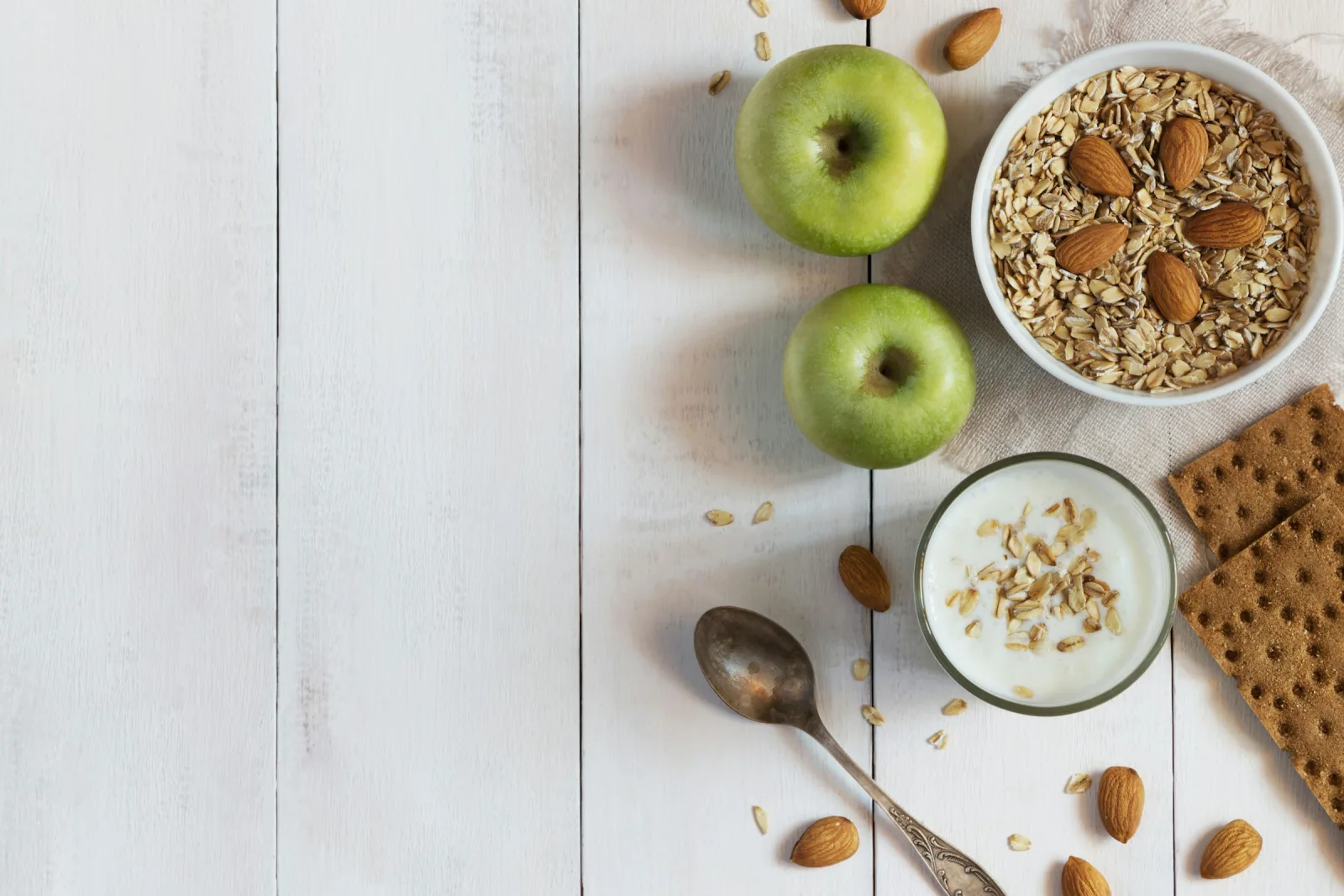
| Typical sources | Oats, barley, beans, lentils, apples, citrus, chia seeds |
Why does soluble fiber matter for women in midlife?
It matters because most women fall well short of their fiber target, and midlife is where the gap is widest. Women aged 40 to 49 averaged 14.5 grams of fiber a day in the same USDA survey, while the official target at 31 to 50 is 25 grams. That is a gap of about 10 grams.
The 2020 to 2025 Dietary Guidelines set women’s targets at 28 grams at ages 19 to 30, 25 grams at 31 to 50, and 22 grams from 51. Those are for total fiber, not soluble fiber alone, and no official target exists for the soluble part. Eating a mix of fiber-rich foods covers both.
Where does soluble fiber come from?
Soluble fiber comes mostly from plant foods, and sometimes from supplements. The clinician review lists these as good sources:
- Fruits: apples, pears, citrus, berries, plums, peaches and apricots.
- Vegetables: carrots, broccoli, Brussels sprouts, sweet potatoes and onions.
- Beans, grains and seeds: beans, lentils, chickpeas, oats, barley, rye and chia seeds.
Psyllium husk is the best-known supplement form. In a 2022 review of 16 trials with 1,251 adults, 66% of people with chronic constipation improved on fiber, compared with 41% on a placebo. Results looked best with psyllium at doses above 10 grams a day, taken for at least 4 weeks. Gas was more common with fiber than with placebo.
What do people get wrong about soluble fiber?
The most common mistake is expecting a big, fast effect. The cholesterol results above are real but small, as the review authors note. Soluble fiber is one part of a diet, not a stand-alone fix.
A second mix-up is thinking foods hold only one type. Oats, apples and beans carry both, so a varied diet gives you both. A third is jumping up too fast: add fiber over a few weeks and drink water with it, because soluble fiber pulls in water as it forms its gel.
If you take daily medicines or have a digestive condition, ask your doctor or pharmacist before adding a fiber supplement. For a short reader-friendly guide, MedlinePlus has a page on soluble and insoluble fiber. You can also browse more in our fiber coverage or read how we check the research.
Frequently asked questions
What is soluble fiber made of?
It is made of plant carbohydrates such as pectin, gums, mucilage and fructans. They dissolve in water and form a gel, and gut bacteria ferment part of them.
What is the difference between soluble and insoluble fiber?
Soluble fiber dissolves in water and forms a gel, while insoluble fiber does not dissolve and mainly adds bulk to stool. Most plant foods contain some of each.
How much soluble fiber do you need a day?
There is no official target for soluble fiber alone. Women’s targets for total fiber are 22 to 28 grams a day by age, and the trials above used 2 to 10 grams of soluble fiber a day.
Does soluble fiber cause gas?
It can. Gut bacteria ferment it, which makes gas, and gas was more common with fiber than with placebo in a 2022 review of 16 trials. Increasing slowly and drinking water can help.
These statements have not been evaluated by the Food and Drug Administration. This product is not intended to diagnose, treat, cure, or prevent any disease.
This article is for education and is not medical advice. Talk to your doctor before changing your diet, supplements, or medication.
Health Science Mag is an educational publication. Articles are for information only and are not medical advice. Talk to your clinician before changing your supplement routine.